A sharp, cutting pain during a bowel movement with a small streak of bright-red blood often points to an anal fissure, but rectal bleeding has other causes. You will learn how to recognise typical fissure symptoms, understand what keeps a tear from healing, use practical first-line measures and know when examination or further treatment is necessary.
Key takeaways
- Sharp pain during or after bowel movements is a common fissure symptom.
- Hard stools, straining, and diarrhoea can trigger an anal fissure.
- Increase fibre, fluids, and stool-softening habits as first-line care.
- Persistent fissures may need prescription medicine or a procedure.
What an Anal Fissure Feels Like and Where It Occurs
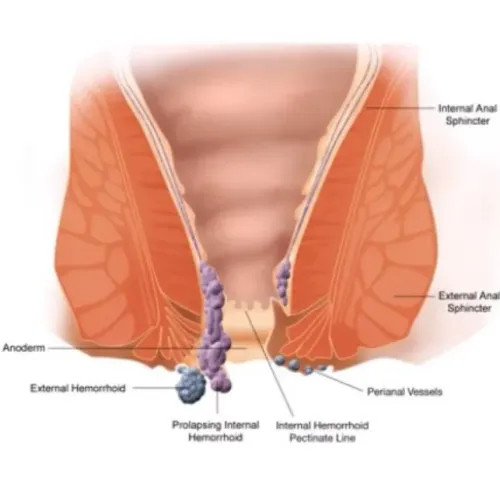
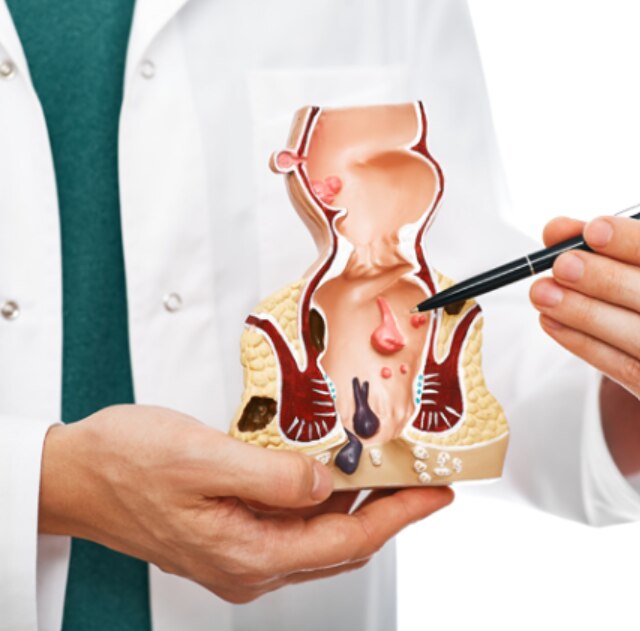
An anal fissure is a linear tear in the anal canal’s anoderm, the thin, skin-like lining at the opening. It most often sits in the posterior midline, although a fissure can occur at the front.
Passage of stool stretches the wound, producing sharp, cutting or burning pain during a bowel movement; pain can continue for minutes or hours afterward.
The symptom pattern is often more useful than the blood itself. Compare the common presentations:
| Feature | Anal fissure | Haemorrhoids | Abscess |
|---|---|---|---|
| Pain | Sharp anal pain during bowel movements instead of painless bleeding from haemorrhoids; spasms may linger afterward | Often painless bright-red bleeding; painful haemorrhoids usually form a tender lump | Constant, throbbing pain, swelling, warmth or fever |
| Bleeding | Small streak on toilet paper or the stool surface | Bright-red blood dripping or coating the stool | Bleeding is not the main feature |
| Visible finding | A crack, or later a small sentinel skin tag | Lump or swollen tissue | Red, tense swelling, sometimes pus |
Itching can accompany a fissure, but severe constant pain, pus, fever, multiple cracks or a side-positioned fissure needs medical assessment. Persistent bleeding also deserves evaluation rather than automatic attribution to a known fissure, especially with changed bowel habits or unexplained anaemia.
Common Triggers, Acute Versus Chronic Fissures, and Warning Signs
Most anal fissure causes begin with hard or large stools, especially when constipation forces straining. Repeated diarrhoea and straining, complications of childbirth, anal trauma, inflammatory bowel disease, and previous anorectal surgery can also injure the lining. A tight internal sphincter reduces local blood flow, making healing harder.
| Type | Time and examination | Practical meaning |
|---|---|---|
| Acute fissure | Recent tear without chronic changes | It often heals after stool consistency and bowel habits improve. |
| Chronic fissure | Persists beyond six weeks, or shows a sentinel skin tag, hypertrophied anal papilla, or exposed internal sphincter fibres | It is less likely to heal with stool-softening measures alone. |
Warning signs deserve assessment because the tear may not be a routine primary fissure:
- A lateral fissure, rather than one at the usual front or back positions, can point to Crohn disease or another secondary cause.
- Multiple, recurrent, or unusually painless fissures need evaluation for inflammatory bowel disease, infection, or malignancy.
- Diarrhoea, weight loss, abdominal pain, fever, or weakened immunity alongside anal pain raises concern for another condition.
- Persistent bleeding, a growing lump, or symptoms that continue beyond six weeks should not be attributed to a fissure without examination.
How Doctors Diagnose a Fissure and Check Rectal Bleeding
Anal fissure diagnosis usually starts with a symptom history and inspection of the anal opening. Tell the clinician when pain begins, how long it lasts after a bowel movement, whether blood is bright red, and whether constipation or diarrhoea preceded it.
Severe pain with a small surface streak of blood supports a fissure; painless bleeding points more toward haemorrhoids.
- During inspection, the clinician looks for a visible tear, sentinel skin tag, swelling, discharge, an anal fistula, or an abscess. A lateral, multiple, unusually painless, or recurrent fissure needs investigation for inflammatory bowel disease, infection, or malignancy.
- A digital rectal examination checks the canal and sphincter, but severe fissure pain can make this unsafe or intolerable. The clinician may postpone it until pain improves.
- Anoscopy uses a short, lubricated tube to view the anal canal and identify haemorrhoids, bleeding points, or another lesion. It is not forced through intense pain.
- Persistent rectal bleeding needs more than a fissure label. Ask about bowel-habit change, abdominal symptoms, anaemia, and weight loss; these findings can require age-appropriate colorectal-cancer assessment, including colonoscopy.
- In a child, constipation is a common trigger, but use a pediatric assessment rather than an adult treatment pathway.
A fissure does not exclude another cause of bleeding. If examination is normal, symptoms do not fit the usual pattern, or bleeding continues after healing, the clinician may order blood tests, stool tests, colonoscopy, or imaging to assess colorectal cancer and inflammatory bowel disease.
First-Line Fissure Care: Soften Stool and Change Bowel Habits
Aim for soft, formed stools rather than diarrhoea. Anal fissure self-care works by reducing stretching and friction while the tear heals: drink adequate fluids, add gradual dietary fibre, and avoid straining. Increase fibre slowly; a sudden large increase can cause gas, cramping or loose stools.
- Use a psyllium fibre supplement when food alone does not provide enough fibre. Follow the packet dose and take it with water.
- Ask a pharmacist or clinician about a stool softener if stools remain hard despite fibre and fluids.
- Use an osmotic laxative, such as polyethylene glycol, when constipation continues; adjust it to produce soft stools, not urgency or diarrhoea.
- Take a warm sitz bath for 10 to 15 minutes after a bowel movement to ease spasm and pain. It supports comfort but cannot repair every chronic fissure.
- Establish a bowel routine after a meal, but limit toilet time to about five minutes. Go when you feel the urge, avoid straining, and do not sit scrolling.
- Clean gently with water or unscented tissue. Avoid repeated wiping, which adds friction to healing skin.
| Option | Best use | What to watch |
|---|---|---|
| Psyllium fibre supplement | Adds bulk and holds water | Increase gradually; drink fluids |
| Stool softener | Helps hard stool pass more gently | Less useful for slow-transit constipation |
| Osmotic laxative | Draws water into stool when constipation persists | Reduce the dose if stools become loose |
Children with fissures need assessment of constipation and age-appropriate dosing; do not copy an adult laxative plan.
Treatment Options When a Fissure Does Not Heal
A fissure lasting beyond six weeks, or showing a sentinel skin tag or exposed sphincter fibres, needs chronic anal fissure treatment rather than repeated stool-softening measures alone. Compare options by healing durability, side effects and your baseline continence.
| Option | What it means | When it applies |
|---|---|---|
| Topical nitroglycerin | Relaxes the internal sphincter; headache is common | A non-operative first prescription option; stop and report severe headache or dizziness |
| Diltiazem or nifedipine | Topical calcium-channel blockers with similar healing effectiveness and fewer headaches in many studies | When nitroglycerin causes headache or is unavailable |
| Botulinum toxin injection | Temporarily weakens the internal sphincter | When creams fail, are not tolerated, or surgery raises continence concerns; repeat treatment may be needed |
| Lateral internal sphincterotomy | Divides part of the tight internal sphincter; healing commonly exceeds 90% | The most durable operation for appropriately selected patients |
| Tailored sphincterotomy | Limits the cut to the fissure length instead of extending to the dentate line | When reducing the faecal incontinence risk is a priority |
Before surgery, discuss prior incontinence, older age, anorectal operations and obstetric injury, especially a third- or fourth-degree tear. These factors can increase the chance of new or worsened leakage of gas or stool. Botulinum toxin avoids a permanent cut but heals less reliably than successful sphincterotomy.
At Dr. Suradkar Laparoscopy Centre 08048032179, ask which findings make a tailored sphincterotomy safer than a full-length cut, and how continence will be assessed before consenting.
Related service
Fissure Treatment Dr. Shekhar Suradkar provides advanced and effective treatment for anal fissures at Highway Hospital. View service → |
Frequently asked questions
What does an anal fissure feel like?
An anal fissure often causes sharp or burning pain during bowel movements, with pain that can continue afterward. Bright-red blood on toilet paper or the stool can also occur.
What causes an anal fissure?
Hard stools, straining, constipation, and repeated diarrhoea can tear the anoderm. Childbirth and other conditions can also contribute.
When should rectal bleeding be checked by a doctor?
Arrange an assessment for persistent, heavy, dark, or unexplained bleeding, or bleeding accompanied by severe pain, fever, dizziness, weight loss, or a change in bowel habits.
How is an anal fissure diagnosed?
A doctor reviews your symptoms and inspects the anal opening. If the bleeding pattern is unusual or another condition is possible, the doctor may recommend further rectal or bowel evaluation.
What is first-line treatment for an anal fissure?
Keep stools soft with fibre, adequate fluids, regular bowel habits, and treatment for constipation when needed. Warm sitz baths and avoiding straining can reduce discomfort.